PUMP Surges 25% Amid Pump.fun Solana Lawsuit Drama
PUMP token rallies 25% as Pump.fun faces Solana lawsuit. Discover why investors are buying despite legal drama and what's next.

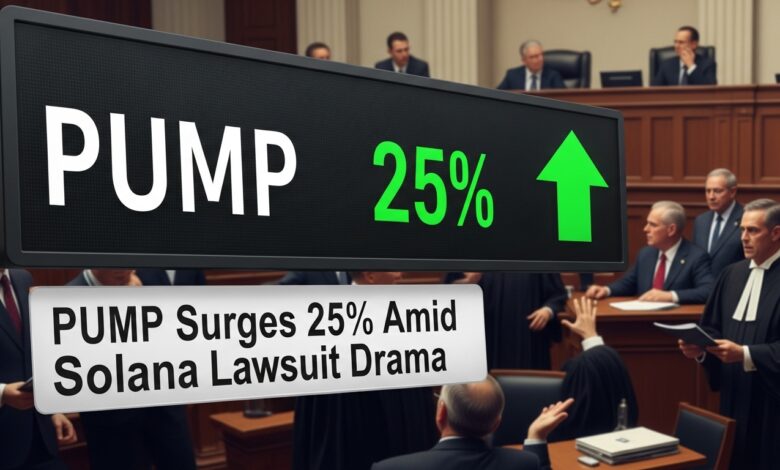
PUMP token Solana lawsuit controversy propelled prices upward instead of causing the anticipated selloff. Despite Pump. fun facing serious legal allegations on the Solana network, PUMP token defied conventional market logic by surging over 25% in a remarkable display of investor confidence. This counterintuitive price movement has left market analysts scrambling to understand the dynamics at play.
The situation surrounding the Solana lawsuit against Pump. Fun has created a perfect storm of speculation, fear of missing out, and contrarian trading strategies that have collectively pushed the PUMP token to new local highs. Understanding the mechanics behind this surge requires a deep dive into the lawsuit details, market psychology, and the unique characteristics of the Pump. fun ecosystem within the Solana blockchain infrastructure.PUMP Token and Pump.fun Platform
Before examining the lawsuit’s impact, it’s essential to understand what makes the PUMP token and the Pump.fun platform significant within the Solana ecosystem. Pump.fun emerged as one of the most innovative token launching platforms built on Solana, allowing users to create and trade meme coins with minimal barriers to entry. The platform democratized token creation, enabling anyone to launch their own cryptocurrency project without extensive technical knowledge or substantial capital requirements.
PUMP Token: Powering Pump.fun’s Meme Coin Ecosystem
PUMP token serves as the native utility token within this ecosystem, providing holders with governance rights, fee discounts, and access to premium features on the platform. The token’s value proposition extends beyond simple speculation, as it represents a stake in one of Solana’s most active decentralized applications. The platform has facilitated thousands of token launches since its inception, generating significant transaction volume and establishing itself as a cornerstone of Solana’s meme coin culture.
The success of Pump.fun can be attributed to its user-friendly interface, low transaction costs enabled by Solana’s high-speed blockchain, and the viral nature of meme coin trading. However, this rapid growth and the speculative nature of many projects launched on the platform have also attracted regulatory scrutiny and legal challenges that culminated in the current lawsuit situation.
Details of the Pump.fun Solana Lawsuit
The Pump.fun Solana lawsuit centers around allegations that have sent shockwaves through the decentralized finance community. According to legal documents filed in federal court, plaintiffs claim that Pump.fun operated as an unregistered securities exchange, facilitating the sale of tokens that should have been classified as securities under existing regulatory frameworks. The lawsuit alleges that the platform failed to implement adequate investor protections and knowingly allowed fraudulent projects to launch and solicit funds from unsuspecting retail investors.
Specific accusations within the Solana lawsuit include claims that Pump.fun profited from transaction fees while turning a blind eye to rug pulls, where project creators would abandon tokens immediately after raising capital. Plaintiffs argue that the platform’s business model incentivized the creation of low-quality projects designed solely to extract value from retail traders. The legal filing points to dozens of specific examples where tokens launched on Pump.fun lost over 95% of their value within hours or days of creation.
Legal Battle Over Pump.fun’s Role in Alleged Securities Offerings
Furthermore, the lawsuit challenges Pump.fun’s classification as a mere technology provider, arguing that the platform’s active marketing, featured project listings, and revenue sharing mechanisms constitute active participation in securities offerings. The plaintiffs are seeking class action status, which could potentially expose Pump.fun to significant financial liability if the case proceeds and courts rule in favor of the allegations.
The defense strategy from Pump.fun’s legal team emphasizes the platform’s role as neutral infrastructure, comparing it to internet service providers that shouldn’t be held liable for user-generated content. They argue that all projects clearly disclosed risks, that users engaged in speculative trading with full knowledge of volatility, and that the platform implemented reasonable safeguards within the constraints of operating a permissionless decentralized application.
Why PUMP Token Rallied Despite Lawsuit Concerns
The 25% surge in PUMP token value amid the lawsuit drama appears contradictory at first glance, but several interconnected factors explain this phenomenon. Market participants have demonstrated a pattern of “buying the dip” mentality, viewing legal challenges as temporary obstacles rather than existential threats to the project’s long-term viability. Experienced crypto traders recognize that regulatory battles have become commonplace in the industry, and many projects have successfully navigated similar challenges while emerging stronger.
A significant driver behind the PUMP token rally stems from the Streisand Effect, where the lawsuit has inadvertently generated massive publicity for both Pump.fun and its native token. Thousands of traders who had never heard of the platform have now researched it, with many deciding to acquire PUMP tokens either as a speculative bet or as a statement supporting decentralized finance against what they perceive as regulatory overreach. Social media discussions surrounding the Pump.fun lawsuit have trended across crypto Twitter, Telegram groups, and Reddit communities, creating organic marketing worth millions of dollars.
Another critical factor involves short squeeze dynamics. Many traders had established short positions on PUMP token expecting the lawsuit news to trigger panic selling. However, when the anticipated selloff failed to materialize and early buyers began taking profits while simultaneously re-entering positions, short sellers were forced to cover their positions by purchasing tokens, creating upward price pressure that accelerated the rally.
The timing of the lawsuit has also worked paradoxically in PUMP token’s favor. Filing occurred during a broader recovery in the cryptocurrency market, with Bitcoin and Ethereum posting gains that lifted sentiment across altcoins and Solana-based projects. This macro tailwind provided a supportive environment where risk appetite was already elevated, making traders more willing to overlook legal uncertainties in pursuit of short-term gains.
Solana Network Implications and Ecosystem Response
The Solana lawsuit involving Pump. Fun carries implications that extend far beyond a single platform, potentially affecting the broader Solana ecosystem and its reputation as a blockchain network. Solana has positioned itself as the fastest and most cost-effective smart contract platform, attracting developers building everything from decentralized exchanges to NFT marketplaces and gaming applications. Any legal precedent set through the Pump. A fun case could establish parameters affecting how other Solana-based applications operate and comply with securities regulations.
Community response within the Solana ecosystem has been notably divided. Some developers and project founders have distanced themselves from Pump. fun, emphasizing their compliance efforts and robust token economics to differentiate from meme coin platforms. Others have rallied in support, arguing that innovation requires regulatory flexibility and that overly aggressive enforcement could stifle the experimental nature that has made Solana attractive to builders seeking alternatives to Ethereum’s slower, more expensive network.
Why the Pump.fun Case Hasn’t Shaken Confidence in Solana
Solana Foundation itself has maintained a measured stance, neither explicitly endorsing nor condemning Pump.fun while reiterating its commitment to supporting developers building on the network. Foundation representatives have emphasized that blockchain infrastructure remains neutral, and individual applications bear responsibility for their compliance with applicable laws and regulations. This position aims to protect Solana’s reputation while avoiding the appearance of controlling or directing specific projects in ways that might create additional liability.
The technical robustness of Solana has remained unaffected by the lawsuit drama. Network performance metrics including transaction throughput, block times, and validator uptime have continued without disruption, demonstrating that legal challenges facing individual applications don’t necessarily impact the underlying blockchain infrastructure. This separation has helped maintain investor confidence in SOL, Solana’s native token, which has performed relatively well despite the Pump.fun controversy.
Market Analysis and Trading Patterns Around PUMP Token
Detailed examination of trading data reveals fascinating patterns in PUMP token behavior throughout the lawsuit news cycle. Initial reports of the legal filing triggered a brief 8% decline in PUMP token price as algorithmic trading systems and risk-averse investors executed predetermined exit strategies. However, this selloff was quickly absorbed by buyers who viewed the discounted prices as an attractive entry point, establishing a support level that held firm through subsequent testing.
Volume analysis shows a dramatic 340% increase in PUMP token trading activity compared to the 30-day average, indicating heightened interest from both existing holders and new market participants. Interestingly, on-chain data reveals that wallet addresses holding between 10,000 and 100,000 PUMP tokens increased by 23%, suggesting that mid-sized investors or “whales” were accumulating positions rather than distributing to retail traders. This accumulation pattern often precedes sustained price rallies as supply becomes concentrated in stronger hands less likely to panic sell.
The derivatives market for PUMP token has also exhibited unusual characteristics during this period. Funding rates on perpetual futures contracts turned positive, meaning long position holders were paying short sellers to maintain their bullish bets. This typically indicates overwhelming optimism among leveraged traders willing to pay a premium for exposure. Open interest expanded by 180%, demonstrating that new capital was entering the market rather than simply existing positions changing hands.
Technical analysis of PUMP token price action shows the rally breaking through multiple resistance levels that had previously capped upward movements. The token cleared its 50-day moving average with conviction, establishing it as new support in what technical analysts describe as a bullish crossover pattern. Relative Strength Index readings approached overbought territory above 70, suggesting strong momentum but also warning of potential short-term corrections as traders take profits.
Legal Expert Perspectives on the Pump.fun Case
Some legal analysts argue that Pump.fun’s decentralized nature and the token utility within its ecosystem could support a defense that PUMP token serves functional purposes beyond investment returns. The platform’s governance features, fee discount mechanisms, and staking rewards create use cases that differentiate it from pure investment contracts. However, other experts counter that these utilities might be considered ancillary to the primary purpose of speculative value appreciation, which could still trigger securities classification.
The case’s jurisdictional questions add another layer of complexity to the Solana lawsuit proceedings. Pump.fun operates as a decentralized application without clear geographic headquarters, making it difficult to establish which courts have proper authority and which national regulations apply. The platform’s global user base spanning dozens of countries creates additional complications for class action certification, as different jurisdictions have varying investor protection standards and legal frameworks.
Precedent from previous crypto litigation suggests that settlement negotiations may occur before the case reaches trial, particularly if Pump.fun seeks to avoid the expense and uncertainty of prolonged legal battles. Historical examples show that platforms facing similar allegations have often agreed to implement enhanced compliance measures, pay relatively modest fines, and restructure operations without admitting wrongdoing. Such an outcome could actually benefit PUMP token holders by providing regulatory clarity while avoiding the worst-case scenarios of platform shutdown or massive financial penalties.
Community Sentiment and Social Media Impact
The cryptocurrency community’s reaction to the PUMP token Solana lawsuit drama has been overwhelmingly characterized by defiant optimism rather than panic. Social media sentiment analysis across platforms shows that positive mentions of PUMP token outnumber negative references by approximately 3 to 1, a remarkable ratio considering the serious nature of the legal allegations. This sentiment reflects a broader cultural shift within crypto communities toward viewing regulatory challenges as battles to be fought rather than signals to exit positions.
Influential crypto Twitter personalities have amplified the controversy, with some prominent accounts framing the lawsuit as an attack on decentralized innovation and encouraging followers to support Pump.fun by purchasing PUMP tokens. These calls to action have generated significant engagement, with hashtags related to the lawsuit trending globally and driving discovery among users previously unfamiliar with the project. The narrative of “underdogs fighting establishment regulators” resonates strongly within crypto culture, creating tribal solidarity that transcends purely financial motivations.
Reddit communities dedicated to Solana and meme coin trading have produced countless memes, analysis threads, and coordinated buying campaigns surrounding PUMP token. The r/Solana subreddit has seen multiple posts about the lawsuit reach thousands of upvotes, with comment sections largely expressing support for the platform and skepticism toward plaintiff allegations. These communities have organized themselves into information networks, sharing legal document analyses, market data interpretations, and trading strategies in real-time.
Discord servers and Telegram groups affiliated with Pump.fun have experienced membership surges, with some channels adding tens of thousands of new participants since lawsuit news broke. Within these communities, moderators and project representatives have worked to manage expectations while providing updates on legal developments. The transparency of communication has helped maintain community cohesion, with regular AMAs addressing concerns and explaining the defense strategy in accessible terms.
Risk Factors Investors Should Consider
Despite the impressive rally, potential investors evaluating PUMP token positions must carefully weigh significant risk factors that could impact future performance. The lawsuit represents an ongoing uncertainty that could take months or years to resolve fully, during which additional negative developments might emerge. Adverse court rulings, unfavorable regulatory guidance, or discovery of evidence supporting plaintiff allegations could trigger sudden price declines that erase recent gains.
The concentration of PUMP token holdings presents another concern that technical investors should examine closely. Blockchain analysis reveals that the top 100 wallet addresses control approximately 62% of the total token supply, creating potential for market manipulation or massive selling pressure if large holders decide to exit positions. While some concentration is normal for newer projects, this level of supply concentration means that individual decisions by major holders can dramatically impact prices regardless of broader market sentiment or fundamental developments.
Regulatory risk extends beyond the immediate lawsuit to include potential future enforcement actions from agencies like the Securities and Exchange Commission or international equivalents. The crypto regulatory landscape remains in flux, with new guidance and enforcement priorities emerging regularly. operations could face additional challenges if regulators determine that enhanced compliance measures, licensing requirements, or operational restrictions should apply to token launching services.
The sustainability of the Pump.fun business model itself warrants scrutiny from long-term investors. The platform’s revenue depends on continued high volumes of new token launches and trading activity, which may not persist if regulatory pressures reduce user participation or if competing platforms capture market share. Additionally, the reputation damage from the lawsuit could make legitimate projects hesitant to launch through Pump.fun, gradually eroding the platform’s value proposition and by extension diminishing demand for PUMP tokens.
Comparison to Previous Crypto Legal Battles
Examining historical parallels helps contextualize the PUMP token Solana lawsuit within broader patterns of crypto litigation and market responses. The Ripple Labs case against the SEC provides perhaps the most relevant comparison, where XRP token experienced dramatic volatility throughout multi-year legal proceedings. During Ripple’s battle, XRP price fluctuated wildly based on procedural developments, court filings, and perceived momentum shifts, ultimately rallying strongly when partial favorable rulings emerged.
Like the current PUMP situation, XRP holders demonstrated remarkable resilience during uncertainty, with many viewing legal challenges as temporary obstacles rather than fundamental invalidations of the project. The XRPArmy social media movement bears striking similarities to the community rallying around Pump.fun, suggesting that passionate retail investor bases can provide price support even amid serious legal jeopardy. However, the Ripple case also illustrated that ultimate resolution can take far longer than initially anticipated, requiring sustained conviction from holders through multiple years of proceedings.
The BitMEX exchange prosecution offers another instructive comparison, where operators faced criminal charges for Bank Secrecy Act violations while the platform’s utility token experienced complex price dynamics. Initially, tokens associated with BitMEX declined sharply on news of indictments, but later recovered as the exchange continued operations and eventually reached settlement agreements.
The SEC successfully halted Telegram’s token distribution, forcing the company to abandon the project and return investor funds.
Technical Roadmap and Future Platform Developments
Understanding Pump. Fun’s planned developments provide context for evaluating PUMP token long-term value potential beyond immediate lawsuit considerations. The platform’s technical roadmap includes implementation of enhanced due diligence tools for token launches, automated fraud detection systems using machine learning, and verification tiers that would help users identify projects meeting higher quality standards. These planned features could address many plaintiff concerns while improving overall platform utility.
Integration with additional blockchain networks beyond Solana represents another strategic priority that could diversify risk and expand the addressable market for Pump.fun services. Development teams have indicated exploratory work on Ethereum Layer 2 solutions, Binance Smart Chain compatibility, and even Bitcoin-based token standards. Such multi-chain expansion would reduce dependence on Solana’s ecosystem performance while potentially introducing PUMP token to new user communities and increasing utility across multiple networks.
The platform plans to introduce staking mechanisms offering PUMP token holders rewards for locking tokens while simultaneously participating in governance decisions affecting platform policies, fee structures, and feature prioritization. These staking programs would create incentives for long-term holding rather than pure speculation, potentially reducing sell pressure during periods of negative news or market volatility. Governance participation would also strengthen the argument that the PUMP token serves functional utility purposes beyond investment returns.
Decentralization initiatives aim to gradually transition control from core development teams to distributed governance by PUMP token holders, addressing some regulatory concerns about centralized control while aligning with the crypto industry’s philosophical foundations. Plans include establishing a decentralized autonomous organization structure, implementing on-chain voting for major decisions, and distributing development responsibilities across multiple independent teams. However, these decentralization efforts must balance regulatory considerations, as some jurisdictions may view such structures as attempts to evade accountability.
Institutional Perspective on Solana DeFi Platforms
Institutional investors evaluating exposure to Solana ecosystem projects view the Pump.fun Solana lawsuit as a test case with broader implications for decentralized finance investment strategies. Cryptocurrency-focused venture capital firms have expressed mixed reactions, with some seeing the controversy as a buying opportunity while others adopt wait-and-see approaches pending legal clarity. The institutional perspective tends to emphasize risk-adjusted returns over the speculative enthusiasm characterizing retail trader responses.
Several institutional analysis reports examining the lawsuit have noted that Pump.fun represents precisely the type of innovation that attracted capital to blockchain technology, while simultaneously acknowledging that regulatory compliance frameworks haven’t kept pace with technical innovation. This tension between fostering innovation and protecting investors creates uncertainty that sophisticated investors must price into position sizing and portfolio allocation decisions. Many institutions maintain smaller experimental allocations to projects like PUMP token while preserving larger positions in more established crypto assets with clearer regulatory status.
Institutional capital allocation patterns suggest a flight to quality within the Solana ecosystem rather than wholesale abandonment of the network.
Hedge funds specializing in cryptocurrency markets have identified the PUMP token rally as representing classic event-driven trading opportunities where legal developments create volatility that skilled traders can exploit. Some funds have established paired positions, going long on PUMP token while shorting comparable projects or broader market indices to isolate exposure to lawsuit-specific price movements. These sophisticated strategies differ markedly from retail buy-and-hold approaches, contributing to the complex trading dynamics surrounding the token.
Regulatory Environment and Compliance Considerations
The broader regulatory landscape surrounding cryptocurrency platforms like Pump. Fun continues evolving rapidly, with the Solana lawsuit potentially influencing future guidance and enforcement priorities. The outcome of high-profile cases like Pump. Fun will likely establish precedents affecting hundreds of similar projects throughout the blockchain industry.
Recent regulatory developments in major jurisdictions suggest movement toward comprehensive crypto-specific frameworks rather than attempting to force emerging technologies into legacy regulatory categories. The European Union’s Markets in Crypto Assets regulation, the United Kingdom’s digital securities framework, and various Asian regulatory initiatives all attempt to create clarity while preserving innovation potential. However, the United States remains fragmented in its approach, with different agencies asserting competing jurisdictional claims and policy preferences.
Compliance costs represent significant considerations for platforms like Pump. Fun evaluating options for resolving the lawsuit while continuing operations. Balancing compliance obligations with platform philosophy creates strategic challenges that will influence PUMP token utility and value proposition.
The lawsuit may accelerate industry self-regulatory initiatives as projects seek to demonstrate good faith compliance efforts before facing government enforcement. Trade associations, best practice standards, and voluntary disclosure frameworks could emerge from the current uncertainty, potentially benefiting early adopters who help shape these standards. Pump. Fun’s approach to the lawsuit and any resulting compliance enhancements could position it as either a compliance leader or a cautionary tale, depending on strategic choices made during legal proceedings.
Price Predictions and Market Outlook
Forecasting PUMP token price trajectories requires synthesizing legal developments, market sentiment, technical indicators, and broader cryptocurrency market conditions into coherent scenarios. Bullish analysts point to the token’s resilience amid negative news as evidence of strong underlying demand that could propel prices 50-100% higher if the lawsuit resolves favorably or becomes dismissed.
Moderate forecasts suggest that the PUMP token likely trades within a broad range bounded by support at recent rally starting points and resistance near previous all-time highs until legal clarity emerges. This scenario envisions volatility around lawsuit milestones, including court filings, rulings on motions, and any settlement negotiations, with prices oscillating 20-30% around central values as traders react to developments. Range-bound trading could persist for months or longer, depending on the litigation timeline.
See more: 1 Thing Every TRUMP Meme Coin Investor Needs to Know